
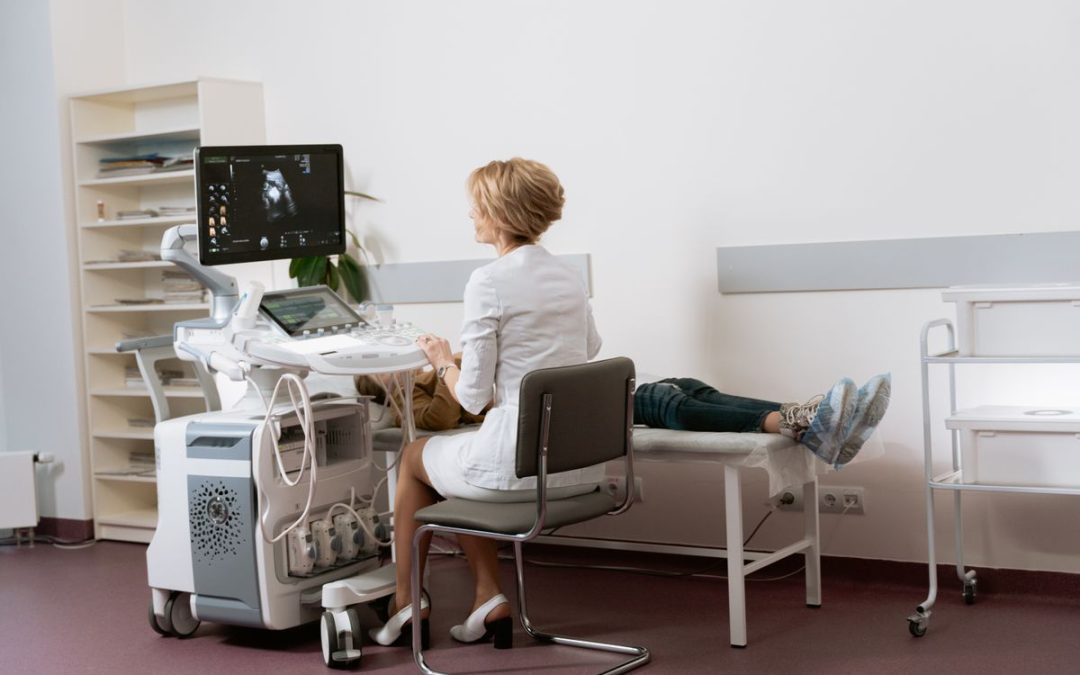
Office-based hysteroscopy and endometrial ablation are performed routinely in private OB/GYN practices – and the economics are compelling compared to hospital or ASC settings. The financial case is real, but the service line requires infrastructure that most practices underestimate at launch.
Key Takeaways
- Office-based gynecologic surgery (OBGS) is gaining clinical and economic momentum: outpatient and office-based procedures now account for more than 59 percent of gynecologic procedure volume, driven by technology, local anesthesia advances, and payer cost-containment pressure.
- Endometrial ablation and diagnostic and operative hysteroscopy are the most commonly migrated procedures in private OB/GYN practice – both have established CPT codes, and the economics favor the office setting for most payer mixes.
- The physician professional fee is paid the same regardless of site of service; capturing value from office migration comes from avoiding the ASC facility fee and from the improved scheduling efficiency that an in-office procedure list provides.
- The binding constraint in office-based procedure migration is almost never the physician’s clinical competence – it is the scheduling workflow, consent and prep process, recovery space, and billing setup that determine whether the service line performs financially.
The migration of gynecologic procedures from hospital operating rooms and ambulatory surgery centers to the physician office has been underway for more than a decade, accelerated by improvements in miniaturized instruments, outpatient anesthesia techniques, and – importantly – payer pressure to perform lower-acuity procedures in lower-cost settings. Industry data from 2025 indicates that outpatient and office-based procedures now represent more than 59 percent of gynecologic procedure volume in the United States, a share that continues to grow as device manufacturers invest in office-compatible technology and payers tighten authorization for hospital-based gynecologic procedures they consider appropriately managed in an office or ASC setting.
For the private OB/GYN practice, this trend creates a concrete revenue opportunity. Procedures that were historically referred to a hospital or ASC, generating only the professional fee while the facility captured the technical or facility fee, can instead generate the professional fee in the office setting with the potential to capture associated services – ultrasound guidance, specimen pathology routing, and ancillary monitoring – while eliminating scheduling dependency on an external facility. The improved scheduling efficiency alone is a real financial benefit: a procedure that previously required a hospital block time slot three weeks out can be scheduled in-office within days, reducing both physician downtime and patient attrition.
The financial case is legitimate. The implementation gap between that financial case and actual financial performance is where most office-based procedure programs fail, and it fails in predictable ways that are worth understanding before equipment is purchased.
Which Procedures Actually Migrate Well
Not every gynecologic procedure belongs in the office setting, and conflating the clinical feasibility of in-office performance with the financial viability of in-office billing is an expensive mistake. The procedures that migrate consistently well in private OB/GYN practice share a common profile: they can be performed safely under local anesthesia or minimal sedation without anesthesiologist backup, they have established payer coverage in the office setting, and they do not require equipment or recovery infrastructure that significantly exceeds what the office already has or can reasonably acquire.
Diagnostic and operative hysteroscopy is the clearest example. Office hysteroscopy with miniaturized single-use scopes has become routine in many practices; the clinical literature supports it as safe, effective, and well-tolerated with appropriate patient selection and local anesthesia protocols. CPT codes for diagnostic hysteroscopy (58555) and operative hysteroscopy with biopsy (58558) have defined fee schedule values, and payers that once required ASC or hospital settings for operative hysteroscopy have largely followed the clinical evidence toward coverage in the office setting.
Endometrial ablation is the second high-volume migration candidate. Several devices are FDA-approved for office-based use with local anesthesia, and the clinical literature documents outcomes comparable to ASC-based ablation for appropriately selected patients. Contemporary OB/GYN and peer-reviewed sources have documented that performing endometrial ablation in the office confers benefits of reduced time burden for physician and patient, decreased financial burden, and avoidance of general anesthesia risk – all factors that also support patient acceptance when the option is presented well.
Endometrial biopsy, IUD insertion and removal, colposcopy, and vulvar biopsies are already in-office in most practices. The expansion opportunity is in operative hysteroscopy for fibroid or polyp management, ablation, and selected loop electrosurgical excision procedures.
The physician professional fee for a hysteroscopy is the same whether the procedure happens in the hospital OR or in the office exam room. The difference is who captures the facility component – and whether your practice built the service line to capture it.
The Billing Structure for Office-Based Procedures
The CMS site-of-service differential means that office-based procedures are reimbursed at the non-facility rate, which includes an expense component to account for the practice incurring costs that would otherwise be borne by the facility. For most gynecologic procedure codes, the non-facility rate is meaningfully higher than the facility rate, and the difference is intended to partially offset the overhead of performing the procedure in the office rather than at a hospital.
Understanding this distinction matters for payer contract negotiation. Contracts that specify facility rates for procedures regardless of site of service will undercompensate in-office procedures. Before investing in the equipment and infrastructure to support an in-office procedure program, review your major payer contracts for site-of-service provisions and confirm that the contracted rates reflect non-facility payment for procedures coded in an office setting. If your contracts are silent on this distinction, the default processing may apply facility rates, and the shortfall will appear as an unexplained reduction in procedure reimbursement rather than as a named line item in the explanation of benefits.
Additionally, when ultrasound guidance is used during in-office hysteroscopy, the associated imaging code – if separately reportable and not bundled by the payer – represents additional revenue per procedure. Bundling edits vary by payer and by procedure, and assuming that all component codes will be paid separately is as risky as assuming they are all bundled. Build the analysis payer by payer before projecting procedure revenue.
The Infrastructure That Determines Whether the Service Line Works
The physician’s clinical competence in performing office hysteroscopy or endometrial ablation is almost never the binding constraint on service-line performance. The constraints are operational, and they are consistent across the practices that launch these programs and fail to reach projected volume.
Scheduling is the first constraint. Office procedures require a dedicated block or a reliably protected appointment type, with procedure-specific prep instructions communicated to the patient before arrival, a consent process that is completed before the procedure day, and a recovery space that is not the same exam room needed for the next patient twenty minutes later. Practices that try to insert in-office procedures into a standard clinical schedule without redesigning the template around them will find that procedures start late, run into clinic time, generate patient complaints, and gradually migrate back to the ASC out of scheduling convenience.
The consent and prep process is the second constraint. Patients who arrive for an in-office hysteroscopy without having been adequately counseled about what to expect – in terms of discomfort, recovery time, and what happens if the procedure cannot be completed in the office setting – generate a disproportionate share of procedure-day complications: patients who decline after arriving, patients who cannot tolerate the procedure under local anesthesia, and patients who require rescheduling to the ASC. None of those outcomes are clinically unexpected; they are operationally preventable with a consistent pre-procedure patient communication workflow.
From the Field
A two-physician OB/GYN practice in the Pacific Northwest purchased an operative hysteroscope and endometrial ablation device in the same quarter and began scheduling in-office procedures within sixty days of delivery. Twelve months later, the devices were being used fewer than four times a month combined – well below the volume needed to recover the capital cost, let alone generate net margin. The problem was not clinical; both physicians had completed the required training and were competent in the procedures. The problem was that no scheduling template had been redesigned, the consent and prep workflow was handled ad hoc by whichever MA was available, and the billing setup had not been changed from the ASC-based rates the practice had used when referring these procedures out. Our fractional COO engagement rebuilt the scheduling template over four weeks, scripted and implemented the pre-procedure patient communication process, worked with the billing coordinator to update the fee schedule and site-of-service codes, and audited the first twenty in-office claims for accuracy. Procedure volume reached twelve per month by the end of the engagement quarter, and the revenue per procedure was 22 percent higher than what the practice had been receiving when the cases went to the ASC.
Regulatory and Credentialing Requirements
Office-based surgery regulation varies by state. Some states require specific registration, inspection, or accreditation for physician offices performing procedures above a defined complexity or anesthesia level. Others impose no additional requirement beyond standard medical board licensure. Before launching an operative hysteroscopy or ablation program, confirm the regulatory classification in your state and what, if any, facility registration or accreditation is required. This is not a bureaucratic detail – operating outside the required regulatory classification is both a malpractice exposure and a potential fraud-and-abuse issue if procedures are billed under a site designation that does not match the regulatory status of the facility.
Hospital credentialing requirements are a parallel consideration. Many hospital medical staff bylaws require that physicians performing procedures in office settings maintain privileges for the same procedure at an accredited facility. If your hospital privileges lapse or are not maintained, your ability to perform the procedure in the office – and to transfer a patient to the hospital if a complication requires it – may be compromised. Confirm that your credentialing and privilege status is current and consistent with your office-based procedure scope before your first case.
Consulting or Execution for Service-Line Launch
A consultant can produce the financial model, the payer contract analysis, the scheduling template design, and the regulatory compliance checklist for an office-based procedure program. For practices with an administrator who can own the implementation – rebuilding the template, training the staff, managing the billing setup, and monitoring volume in the first quarter – consulting is often the right and more economical choice. We will say so when it is.
The practices that purchase consulting reports and never launch the service line are consistently practices where the administrator does not have the capacity to run the implementation parallel to daily operations. A fractional executive engagement builds the service line inside the practice rather than handing over the blueprint. That means sitting with the scheduling coordinator to redesign the template, scripting the patient communication with the MA, running the first month’s billing audit alongside the billing coordinator, and reviewing the volume metrics at thirty and sixty days before the engagement closes. Ask any firm offering this work whether that is what they are actually providing, or whether you are purchasing a plan that you will then execute. The answer determines what you are actually buying – and whether you will actually launch.
Sources
- Gynaecology Journal, The Evolution of Office-Based Gynecologic Surgery (2025) — https://www.gynaecologyjournal.com/archives/2025/vol9issue5/B/9-5-33
- Contemporary OB/GYN, Endometrial Ablation in the Office Setting — https://www.contemporaryobgyn.net/view/endometrial-ablation-in-the-office-setting
- CMS, Calendar Year 2026 Physician Fee Schedule Final Rule (CMS-1807-F) — https://www.cms.gov/medicare/payment/fee-schedules/physician
- FOCUS Investment Banking, OB/GYN Practice Valuation Ranges: 2026 — https://focusbankers.com/obgyn-practice-valuation/
More in the OB/GYN Series
- Global Obstetric Billing and Where the Revenue Leaks — the documentation scaffold under the global obstetric package and where it quietly collapses
- Call Coverage, Staffing Models, and the Economics of Physician Burnout — what call coverage actually costs and how to model the staffing arrangements that stop the bleed
- Ancillary Lines in OB/GYN: Ultrasound, Laboratory, and Elective Wellness — building ancillary revenue lines in OB/GYN without creating the compliance exposure that follows a poorly structured service
- Managing Professional Liability Cost in an Obstetric Practice — what actually drives OB/GYN malpractice premium cost and the operational steps that move it