
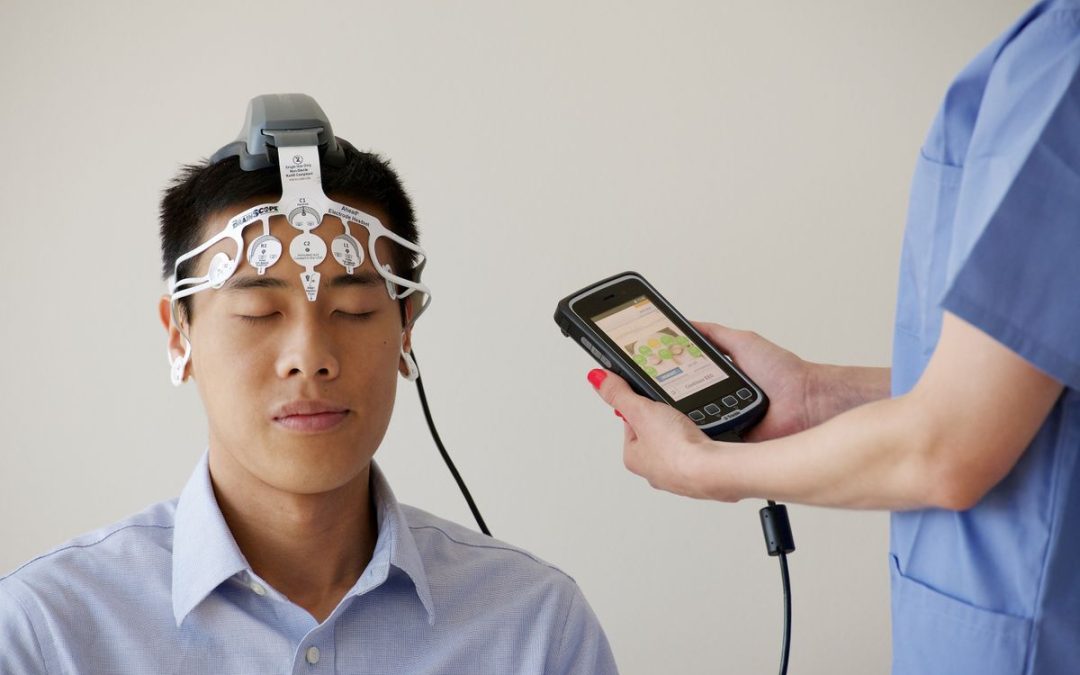
EEG and electrodiagnostic studies are among the few ancillary services where a neurology practice can provide the clinical work and capture the technical and professional components. The compliance framework is tighter than most owners realize.
Key Takeaways
- NCS codes 95907-95913 are banded by number of studies performed that session; EMG codes 95885-95887 are add-ons to NCS encounters, not standalone – billing them as standalone is one of the most common neurodiagnostic billing errors.
- Every Medicare jurisdiction maintains a Local Coverage Determination governing medical necessity for EEG and EMG/NCS; documentation must establish the indication, not merely list the diagnosis code.
- The professional and technical components of in-office neurodiagnostics can both be captured by the practice when the physician interprets and the equipment is practice-owned – but the split-bill rules and modifier requirements must be consistently applied.
- Routine periodic self-audits – claim by claim against the LCD criteria – are the primary defense against payer audit findings in a high-volume neurodiagnostic program.
In-office neurodiagnostics – EEG, needle electromyography, and nerve conduction studies – represent one of the more defensible ancillary revenue lines available to a neurology practice, because they require physician interpretation that a referring practice cannot substitute for a laboratory technician. When the equipment is owned by the practice and the interpreting physician is on staff, the practice can bill both the professional component and the technical component, or the global code, depending on how the service is set up. That billing structure is also where the compliance complexity lives, and it is more layered than most practice owners have been told.
The American Association of Neuromuscular and Electrodiagnostic Medicine maintains detailed coding and billing guidance for its members, and Medicare Administrative Contractors maintain Local Coverage Determinations in every jurisdiction that govern when EEG and electrodiagnostic testing is medically necessary, how many nerves can be studied per session, and what documentation must support the claim. The LCDs are not suggestions. A claim that passes the CPT coding test and fails the LCD medical necessity test is a denied claim on audit, and if it passes audit because nobody looked, it becomes a recoupment when they do.
The business case for in-office neurodiagnostics is real. A well-run electrodiagnostic program reduces referral leakage, shortens the diagnostic pathway for patients, and generates ancillary revenue from equipment the practice owns and deprecates over its useful life. The constraint is not clinical – neurologists do this work. The constraint is billing and documentation discipline applied consistently across high volume, over time, without drift.
The Coding Structure, Precisely
Nerve conduction studies bill under CPT codes 95907 through 95913, banded by the total number of nerve conduction studies performed during the encounter: 95907 covers one through two studies, 95908 three through four, and so on up to 95913 for 13 or more. Each band has its own RVU value. The important rule is that only one NCS code is reported per encounter, regardless of how many individual studies were done – the code selected represents the total count. Reporting multiple NCS codes from the same session, which is a common error when billing staff are not specifically trained on the hierarchy, will generate a duplicate claim or an overpayment on audit.
Needle EMG codes 95885, 95886, and 95887 are add-on codes to NCS encounters, not standalone reportable services. When EMG and NCS are performed in the same session, the NCS code is primary and the EMG codes are reported as add-ons with a modifier indicating they are part of the same encounter. Reporting EMG codes as standalone services without an associated NCS code on the same claim, or reporting the older standalone extremity EMG codes (95860-95864) when the testing was done in conjunction with NCS, is among the most common neurodiagnostic billing errors and a focus of payer audit activity.
EEG coding under 95816 (awake and drowsy), 95819 (awake, drowsy, and asleep), and the prolonged monitoring variants follows a different structure but carries the same documentation requirements: the EEG report must include a clinical interpretation by a physician who reviewed the actual recording, not a technician summary. A signature on a template report without physician-authored interpretation language does not meet the standard and will not survive a medical record request.
The Local Coverage Determination is the document your MAC uses to decide whether your neurodiagnostic claim was medically necessary. If your documentation cannot answer every question in that document, the claim is at risk whether or not it was ever clinically appropriate.
Professional and Technical Components: The Billing Structure
When the practice owns the equipment and the interpreting physician is a practice employee, the practice can bill the global code – the combined professional and technical fee – for each study. When the physician interprets a study performed on equipment owned by a hospital or other entity, only the professional component (modifier 26) is billable by the practice. Getting this wrong in either direction creates problems: billing the global code when only the professional component is earned creates overpayment; billing only the professional component when the global is appropriate leaves technical component revenue on the table.
Practices that perform high-volume neurodiagnostics frequently work with employed or contracted technologists who perform the technical study and physicians who interpret it. That arrangement is fine operationally, but the billing structure and the supervision requirements – whether the physician must be present in the office during the technical study, or whether general supervision applies – depend on the specific CPT code, the payer, and your MAC’s LCD. Medicare’s supervision requirements for diagnostic testing services are detailed and code-specific; a billing policy written for one code does not automatically apply to another, and the rules changed in prior years in ways that some practices have not caught up to.
Building the Self-Audit Process
The single most effective defense against neurodiagnostic audit findings is a periodic self-audit conducted before a payer asks for records. A functional self-audit for an electrodiagnostic program pulls a random sample of claims – twenty to thirty per quarter is a reasonable starting point – and checks each claim against four criteria:
- LCD medical necessity. Does the documentation establish the indication that your MAC’s LCD requires? The diagnosis code is not enough; the clinical rationale must be in the note.
- NCS band accuracy. Does the NCS code reported match the actual number of studies documented in the report? If the report lists eleven nerve conduction studies and the claim shows 95913 (thirteen or more), the code is wrong in the direction of overpayment.
- EMG add-on versus standalone. Is every EMG code billed as an add-on to an NCS code when both were performed in the same session? Flag any EMG standalone billing for review.
- Interpretation documentation. Does the EEG or EMG report include a physician-authored clinical interpretation that goes beyond technician findings? The interpretation must be the work of the billing physician, not a template.
From the Field
A four-neurologist group in the Great Lakes region had operated an electrodiagnostic program for eight years, adding a second technologist as volume grew. A payer audit request on 40 EMG claims prompted an internal review that found a systematic billing error: the practice’s billing software had been configured years earlier to report needle EMG as standalone 95860-series codes rather than as add-ons to NCS codes, and nobody had updated the configuration when the practice transitioned to combined NCS-EMG protocols. The result was that a significant share of electrodiagnostic claims contained codes that implied EMG was performed without NCS, which was clinically inaccurate and technically inconsistent with Medicare’s add-on code rules. Rather than respond to the audit in isolation, our fractional CFO engagement rebuilt the billing configuration, conducted a self-audit of the prior 24 months to quantify the exposure, and worked with the billing coordinator and the MAC contact to implement a voluntary disclosure and repayment for confirmed overpayments. The practice avoided the extrapolated recoupment that would have applied to a contractor-initiated audit finding, because the voluntary process was in place before the audit concluded. The billing configuration has been correct since.
When a Consultant Is Enough and When It Is Not
A qualified health care billing consultant can audit your neurodiagnostic claims, identify the coding errors, and write the corrected billing policy. If your billing manager can implement the configuration change, retrain the staff, and run the quarterly self-audit process, consulting is the right scope and it is the more economical choice for most practices with a capable billing department. We scope it that way when the situation warrants it.
The practices that come to us after a payer audit have usually had the policy written and not implemented, or implemented and not monitored. The quarterly self-audit is the piece that requires someone to own it inside the practice, every quarter, without being asked. A fractional executive installs the process, runs the first two cycles alongside your billing coordinator, and confirms the habit is established before stepping back. Note that “fractional executive” is an unregulated label and some vendors use it to describe what is in practice a project engagement with a deliverable at the end. Ask specifically whether the person will be running the quarterly audit alongside your staff or whether they are delivering a process document and leaving the running to you. The difference is what you are paying for.
Sources
- American Association of Neuromuscular and Electrodiagnostic Medicine, Billing and Coding Resources — https://www.aanem.org/clinical-practice-resources/billing-coding/member-only-coding-resources
- 247 Medical Billing Services, Neurology Billing 2026: EEG, EMG, and Epilepsy Codes — https://www.247medicalbillingservices.com/blog/why-neurology-billing-requires-specialty-expertise-in-2026
- CMS, Calendar Year 2026 Medicare Physician Fee Schedule Final Rule — https://www.cms.gov/newsroom/fact-sheets/calendar-year-cy-2026-medicare-physician-fee-schedule-final-rule
- CMS, HCPCS G2211 Frequently Asked Questions — https://www.cms.gov/files/document/hcpcs-g2211-faq.pdf
More in the Neurology Series
- The Economics of an E/M-Heavy Neurology Practice After the Office Visit Changes — how E/M coding changes and the G2211 add-on code reshape neurology office visit revenue.
- Neurology Infusion Suite Economics and the Buy-and-Bill Risk Equation — how to evaluate infusion suite economics before you sign a drug purchasing agreement.
- Neurology Access and Referral Management: What Long Wait Times Are Actually Costing You — the operational and financial cost of long neurology wait times and how to move the number.
- Telehealth and Staffing Models for a Cognitive Specialty — how to build a neurology telehealth and staffing model that is financially sound and operationally stable.